Introducing to you Group 5 for Khemah Latihan GIS II Semester 24/25
Start
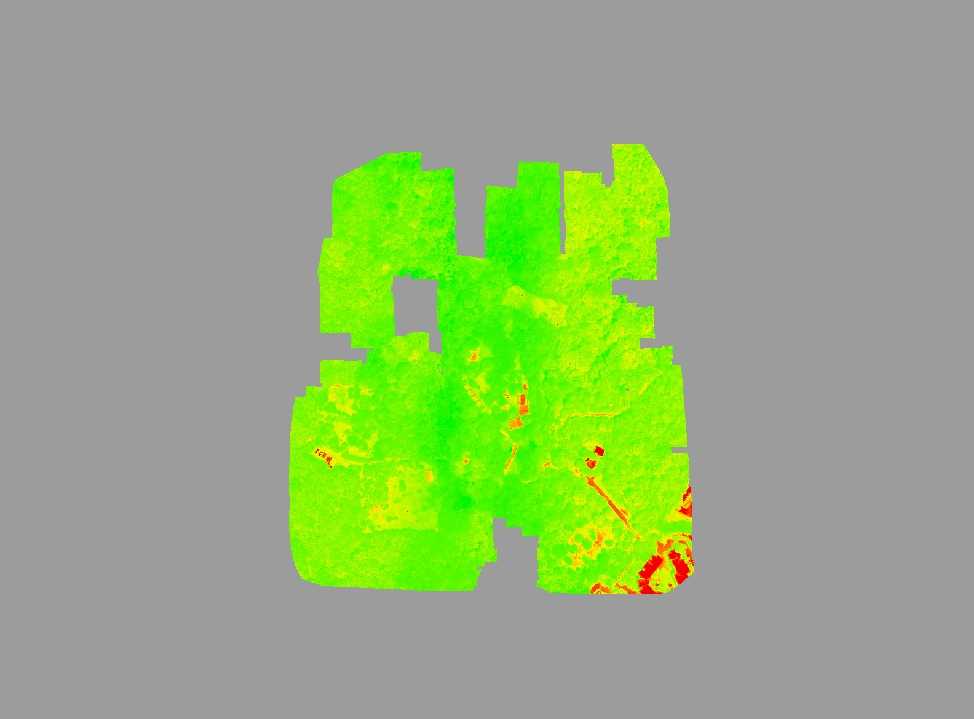
Forests help to regulate temperature by cooling it. The forest canopy offers shade and promotes evapotranspiration, which reduces ambient heat. Mapping the cooling effect of forest canopies aids in understanding their influence on urban microclimates and sustainable development.
Our research combines remote sensing, field measurements, and advanced geospatial analysis to create comprehensive models of forest cooling effects across different ecosystems and seasons.
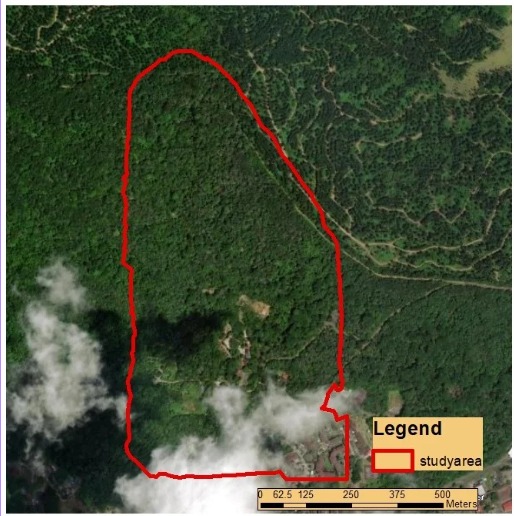
Our systematic approach to measuring forest canopy cooling effects through advanced remote sensing techniques follows this sequential process:
Identifying diverse canopy sites within Hutan Rekreasi for comprehensive sampling.
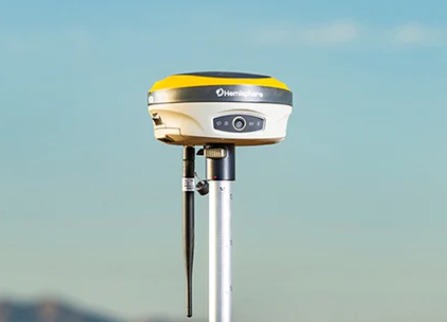
Marking ground control points (GCP) and check points (CP) using TOPCON GR-5 GNSS equipment.
Preparing and calibrating the DJI Matrice 300 RTK drone system for aerial data collection.
Capturing high-resolution thermal imagery and LiDAR data across the selected forest areas.
Extracting Land Surface Temperature (LST), generating DEM/DSM/CHM models, and aligning datasets for analysis.
Utilizing ArcGIS to create comprehensive cooling effect maps based on processed data.
Identifying key cooling areas and finalizing research results with actionable insights.
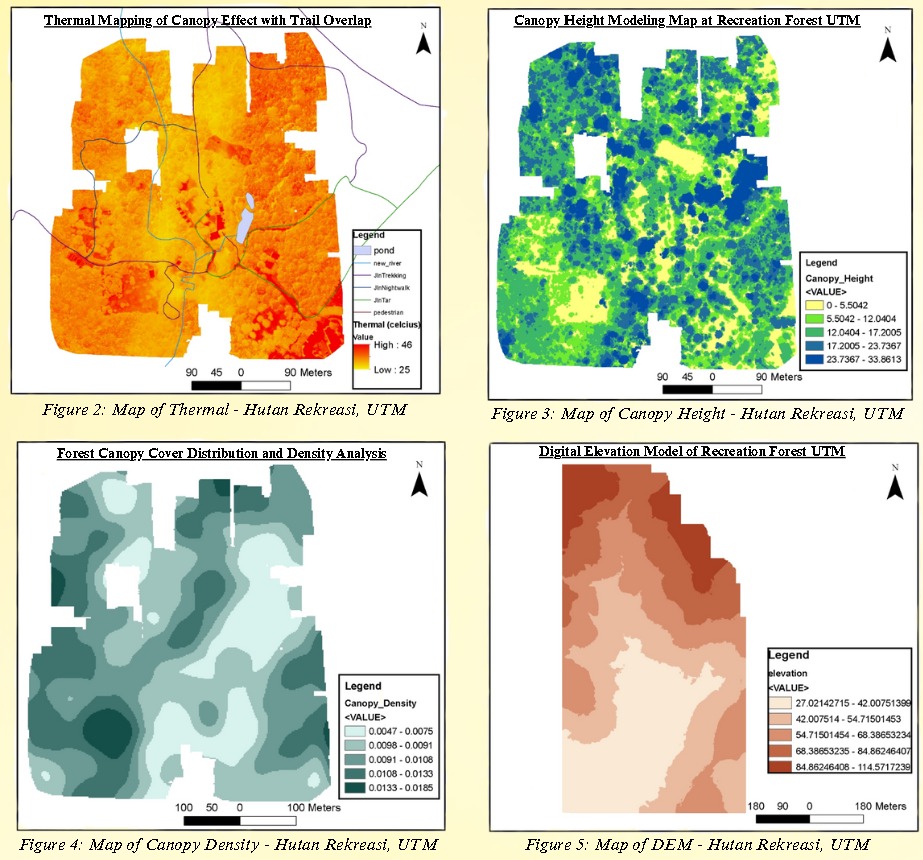
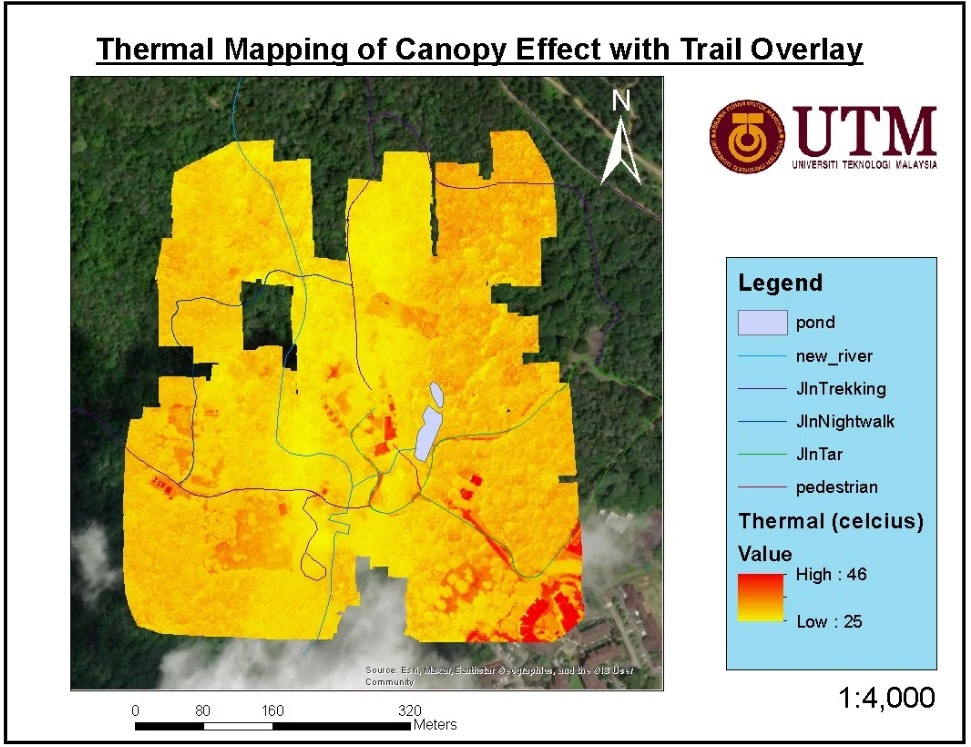
# Higher canopy density generally correlates with cooler surface temperatures in thermal maps, while lower canopy density may result in warmer areas
# In the study "Remote sensing of urban heat islands: A review" by Chen et al. (2011), the authors state:
"Vegetation has a significant cooling effect on surface temperatures, which can be observed through remote sensing techniques."
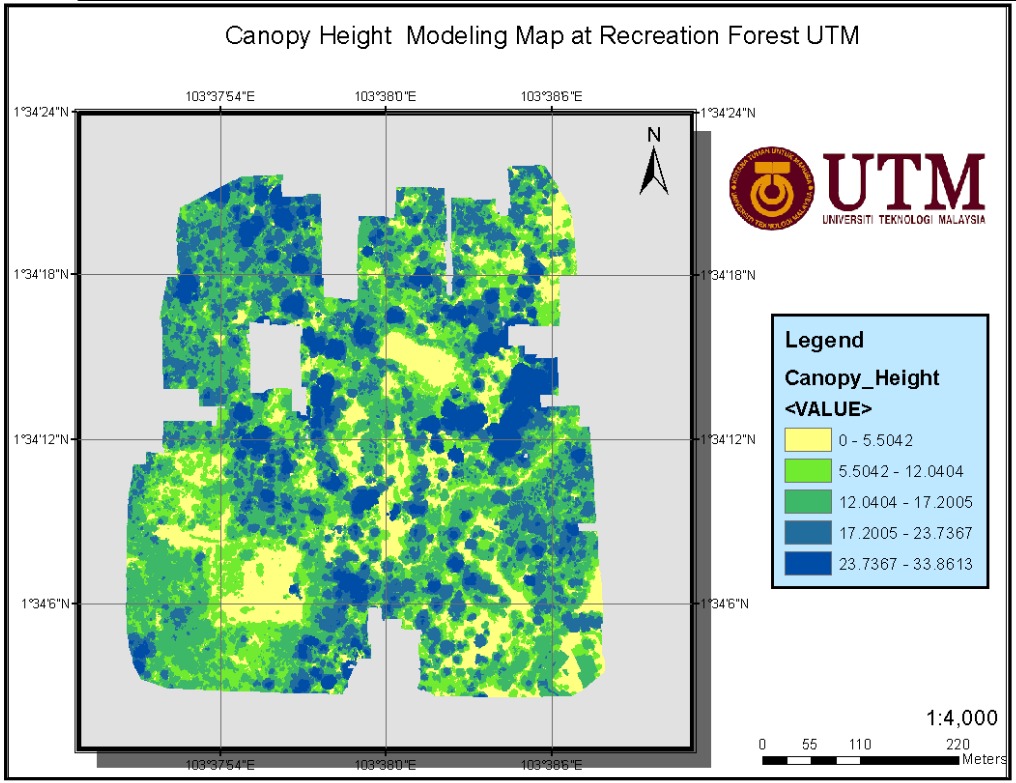
# Taller canopies (higher CHM values) are frequently correlated with lower surface temperatures in thermal maps due to enhanced shade and transpiration. Conversely, shorter canopies or exposed ground may have higher temperatures.
# In the study Lefsky et al. (2002) in "Lidar remote sensing for ecosystem studies" the authors state:
"LiDAR-derived canopy height models are crucial for assessing vegetation structure, which directly impacts microclimatic conditions."
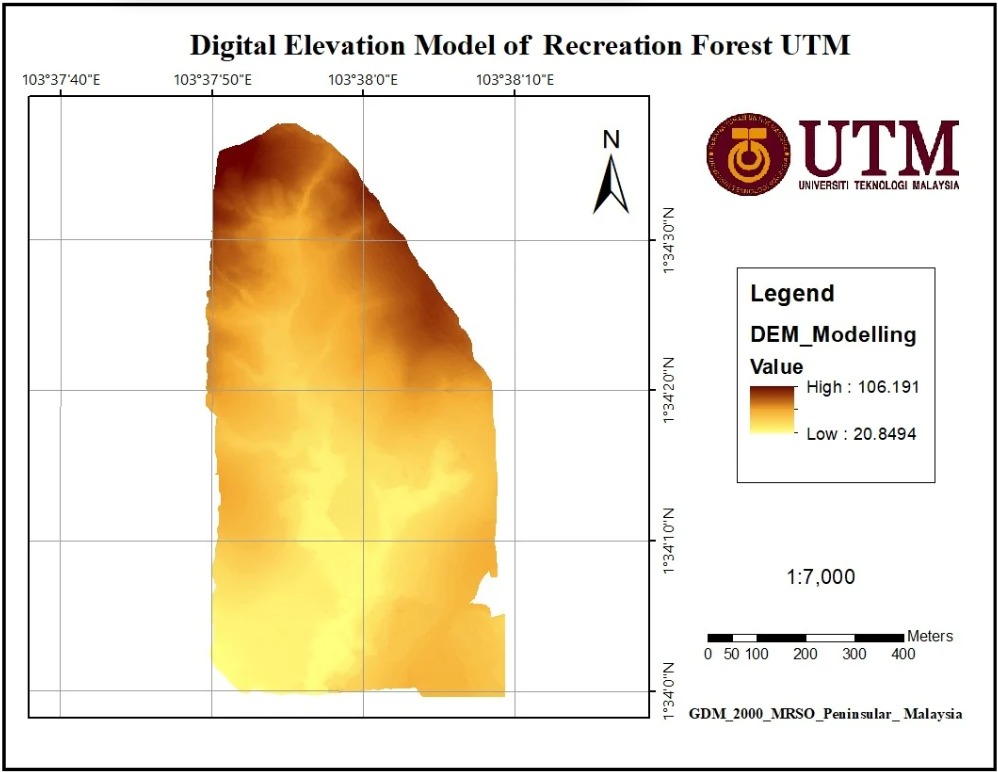
# In thermal mapping, locations at higher elevations may have cooler surface temperatures than lower elevations, assuming similar land cover types. However, the combination of elevation and canopy density might confuse this relationship, since dense vegetation at higher elevations can help to cool temperatures even more.
# In the study Influence of spatial information resolution on the relation between elevation and temperature by Joly et al. (2018), the authors state:
"The slope given by the regression is used to assess the drop in temperature per unit of elevation (temperature lapse rate [TLR])"
Detailed geographical insights into forest cooling effects
Meet the researchers behind the Forest Canopy Cooling Effect project
Project Leader and Programmer
Specializes in forest ecology and microclimate analysis.
Project Analysis
Expert in satellite imagery analysis and geospatial modeling techniques.
Project Manager
Specializes in environmental data analysis and predictive modeling.
Project Technical
Focuses on urban heat islands and nature-based climate solutions.